
In the ever-evolving landscape of contemporary business, we tend to fixate on strategies, decisions, and outcomes as the keystones of leadership. But hidden beneath the surface lies a potent, frequently underestimated force, capable of influencing an organization’s performance—the well-being of its leaders and employees.
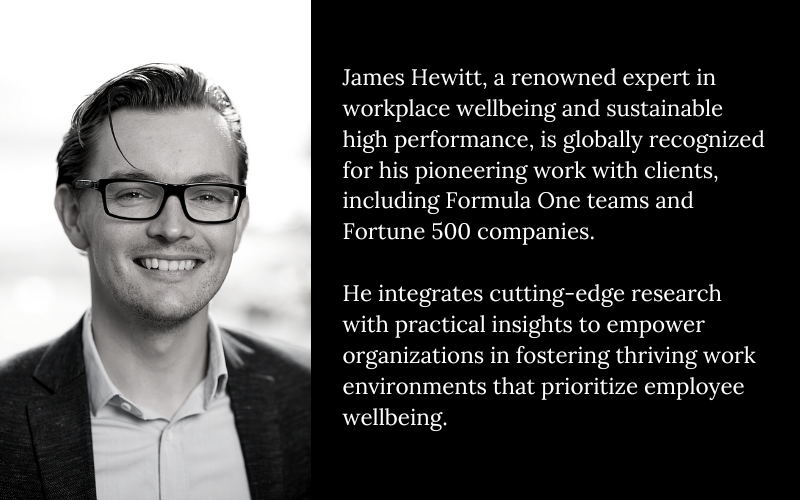
Dare we contemplate this paradigm shift, recognizing that even those steering the ship, are not impervious to the relentless demands of our fiercely competitive world? The truth unfurls with profound implications: the wellness of leaders transcends the individual sphere; it intricately weaves its threads into the fabric of an organization, leaving an indelible mark on its culture, productivity, and ultimate success. To understand how the wellbeing of you as a leader and your employees affects business, we received some excellent insights from wellbeing and performance scientist, James Hewitt.
What can be achieved through employee wellbeing?
As well as being the right thing to do at a human level, investing in employee wellbeing is increasingly associated with tangible returns. For example, data from 1,600 US companies indicate that a one-point increase in the average wellbeing score across a company (on a 1-5 scale) predicted a $2-3 billion increase in annual profit.

What advice would you give leaders on building resilient teams?
There are many possible avenues to build resilient teams, but looking at your own sleep patterns is an excellent place to begin. For example, wearable data indicates that team members report significantly lower levels of psychological safety on days when their leader had a high level of sleep debt.
Do you feel like burnouts will continue to rise if corporate leaders do not put employees’ wellbeing first? Who bears the responsibility for enhancing employee wellbeing? What can be done to achieve this?
Employees certainly bear some responsibility for taking actions to support their wellbeing. However, we can’t expect employees to take those actions if the environment, structures, processes and company culture do not support them. For example, free meditation classes will not fix a poorly designed role with an unrealistic workload.
You have studied complex research and made it into practical strategies. What is your number one tip for leaders who want to improve personal wellbeing and resilience?
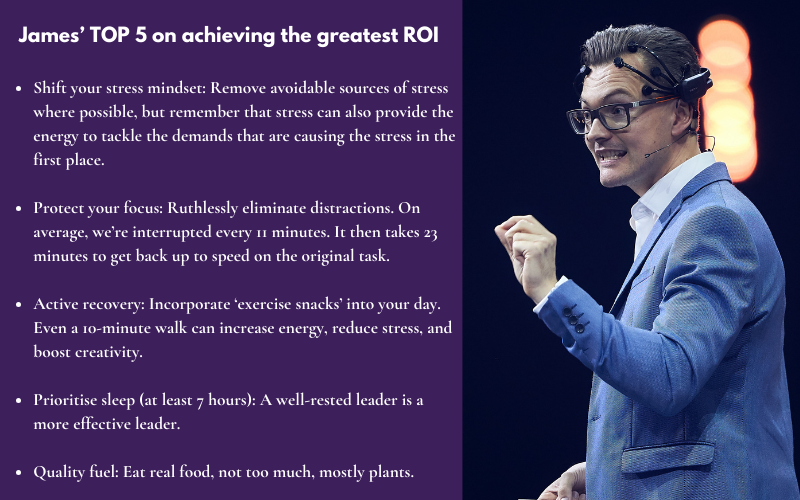
Remember that ‘Stress + Rest = Sustainable High Performance’. Providing we recover effectively, which means actively restoring our resources, as well as getting a break from work demands, we can transform stress into a source of energy, fuel for growth and catalyst for transformation for ourselves and our teams.
Latest news


17 December 2025
How can a Keynote Speaker inspire an audience?
16 December 2025
How Does a Panel Discussion Work?

15 December 2025